

日本化学機械製造株式会社は、化学機器を自社工場にて製造できるプラントエンジニアリング企業です。
自社工場は、高圧ガス設備、圧力容器、また特殊材(耐食材料)の製作も可能で、材料手配から納入まで一括管理を行っています。プラントは様々な装置、機器類の組み合わせで構成されており、エンジニアリングには多くの知識と経験が必要とされます。

また、時代背景?外部環境の変化に伴いプラントに対するお客様のニーズも多種多様に変化しています。 設備の抱える様々な問題の解決、省エネルギー、環境対策、生産効率、品質向上、新製品生産のプロセス構築?設備計画の具現化によりお客様の事業価値向上の一助となるべく、最新の技術の開発、活用に努めております。 常にお客様の立場になり、安全で効率的な設備の構築を念頭に取り組んでおります。
-
THREE:The name of the prisoner was Edward Oxford. He was about eighteen years of age, and of an[472] unprepossessing countenance. He was a native of Birmingham, which town he had left nine years before. He was last employed at a public-house, "The Hog in the Pond," at the corner of South Molton Street and Oxford Street. His trial for high treason was begun in the Central Criminal Court on Thursday, July 9th, and ended next day. The judges were Lord Denman, Baron Alderson, and Justice Patteson. The jury returned the following special verdict:¡ª"We find the prisoner, Edward Oxford, guilty of discharging the contents of two pistols, but whether or not they were loaded with ball has not been satisfactorily proved to us, he being of unsound mind at the time." An argument followed between counsel as to whether this verdict amounted to an absolute acquittal, or an acquittal on the ground of insanity. Lord Denman said that the jury were in a mistake. It was necessary that they should form an opinion as to whether the pistols were loaded with bullets or not; but it appeared they had not applied their minds to that point, and therefore it would be necessary that they should again retire, and say aye or no. Did the prisoner fire a pistol loaded with ball at the Queen? After considerable discussion upon the point, the jury again retired to consider their verdict. During their absence the question was again argued, and it appeared to be the opinion of the judges that the jury were bound to return a verdict of "Guilty" or "Not Guilty" upon the evidence brought before them. After an absence of an hour they returned into court, finding the prisoner "guilty, he being at the same time insane." The sentence was that he should be imprisoned during her Majesty's pleasure, according to the Act 40 George III., providing for cases where crimes were committed by insane persons.
経験と実績をもとに、お客様のニーズに応じた最適な仕様?システムを構築、ご提案いたします。
-
THREE:The next day all seemed quiet; but at evening, the men having got their Saturday's wages and their usual beer, there were some disturbances in Moorfields, and the mob abused some of the Catholics there. The next day, Sunday, the 4th, fresh crowds assembled in the same quarter, and attacked the houses and chapels of the Catholics, and this continued for the next three days. Troops were sent to quell them; but, having orders not to fire, the mob cared nothing for them. Some of the rioters took their way to Wapping and East Smithfield to destroy the Catholic chapels in that neighbourhood; and others burst into and plundered the shops and houses of Messrs. Rainsforth and Maberly, tradesmen, who had been bold enough to give evidence against the rioters taken on Friday. Another detachment took their way to Leicester Fields to ransack the house of Sir George Savile, the author of the Bill for the relaxation of the penal code against the Catholics. This they stripped and set fire to, and some of the pictures and furniture, as well as some of the effects taken from the Catholic chapels and houses in Moor fields, were paraded before the house of Lord George Gordon, in Welbeck Street, in triumph. The mob had now acquired a more desperate character. The fanatic members of the Protestant Association had retired in consternation from the work of destruction, seeing fresh elements introduced into it¡ªelements not of simple religious frenzy, but of plunder and revolutionary fury. They had begun the disturbance, and the thieves, pickpockets, burglars, and all the vilest and most demoniacal tribes of the metropolis had most heartily taken it up.
工場建屋、事務所棟、倉庫、試験棟などの建設も一括してご依頼いただけます。
-
THREE:Notwithstanding these apprehensions, the reception actually given to Lord Anglesey was not at all so disgraceful to the country as he was led to anticipate. Mr. O'Connell kept out of the way; but a numerous assemblage of the most respectable citizens greeted his arrival at Kingstown, and escorted him to Dublin Castle, Lord Cloncurry and Lord Howth riding at the head of the procession. The populace confined the expression of their feeling to a few groans for "Dirty Doherty," whose promotion to the chief seat of the Court of Common Pleas was the alleged offence of Lord Anglesey. He was scarcely a week in Ireland, however, when O'Connell opened the Repeal campaign. A meeting of the trades of Dublin had been arranged for the 27th of December, to march in procession from Phibsborough to his residence in Merrion Square, to present him with an address of thanks for his advocacy of a domestic legislature. Sworn informations having been laid before the Lord-Lieutenant to the effect that serious disturbances were apprehended from this procession, he issued a proclamation on Christmas Day, forbidding it under the Act for the suppression of dangerous associations or assemblies. Mr. O'Connell therefore issued a notice, counter-manding the meeting. On the 4th of January Mr. O'Connell sent a deputation to Lord Cloncurry, to ask him to preside over a Repeal meeting, which he declined. "Those who knew Mr. O'Connell," writes his lordship, "who recollect what a creature of impulse he was, how impatiently he bore with any difference from his opinions, and what a storm was the first burst of his wrath, will not wonder at what followed. Three very long letters were immediately issued, especially devoted to the business of vituperating me, but with ample digressions maledictory of Lord Anglesey." In a few days, he adds, the fever was brought to a crisis by the arrest of Mr. O'Connell and his agitation staff, "after a brisk pursuit through a labyrinth of ingenious devices, whereby he sought to evade the law, in the course of which it was found necessary to discharge five or six proclamations against him. To-day, Mr. O'Connell's audience and claqueurs were termed 'The Society of the Friends of Ireland of all Religious Persuasions.' To-morrow they were 'The General Association of Ireland for the Prevention of Unlawful Meetings,' and for the protection and exercise of the sacred right of petitioning for the redress of grievances. Then, again, they were a nameless body of persons, in the habit of meeting weekly at a place called Home's Hotel; and as the hunt continued, they successively escaped from each daily proclamation under the changing appellations of 'The Irish Society for Legal and Legislative Relief'; or 'The Anti-union Association'; 'The Association of Irish Volunteers for the Repeal of the union'; 'The Subscribers to the Parliamentary Intelligence Office, Stephen Street'; until they were fairly run down at a breakfast party at Hayes Hotel."
環境に配慮し、コストメリットを勘案した、省エネルギーで、省スペースな設備をご提案いたします。
-
THREE:Napoleon Buonaparte, who had appeared so anxious for peace with Britain, was, in truth, greatly rejoiced at the rejection of his proposals, for it furnished him with the pleas which he desired, for the still more extended schemes of military ambition that he entertained. He issued a proclamation complaining of the obstinate hostility of Britain, and called on the people to furnish men and arms to conquer peace by force. Having placed Moreau at the head of the army on the Rhine, Buonaparte prepared for his favourite project of reconquering Italy. He had judged right in sending Moreau to Germany, who took care to prevent the Austrians from sending reinforcements to Italy to increase Buonaparte's difficulties; and another circumstance, most auspicious to the Chief Consul, was the fact that Paul of Russia, offended at the Austrians for not better supporting his generals, Korsakoff and Suvaroff, had withdrawn his army from the campaign. The Austrians, under M¨¦las, in the north of Italy, amounted to one hundred and forty thousand men. They had spent the winter on the plains of Piedmont, and contemplated, in the spring, reducing Genoa, by assistance from the British fleet, and then, penetrating into Provence, to join the Royalists there, ready to take arms under Generals Willot and Pichegru. Massena, freed by the retreat of the Russians from his confinement at Zurich, lay, with an army of forty thousand, between Genoa and the Var; but his troops had suffered great distress from want of provisions, and whole regiments had abandoned their posts, and, with drums beating and colours flying, had marched back into France. Buonaparte first arrested their desertion by several stirring appeals to the soldiers, and then prepared to march with a strong army of reserve through the Alps, and to take M¨¦las unexpectedly in the rear. To effect this it was necessary to deceive the Austrians as to his intentions; and for this purpose he assembled a pretended army of reserve at Dijon, as if meaning to obstruct the march of the Austrians southward. To favour the delusion, Buonaparte went to Dijon, and reviewed the pretended army of reserve with much display, he then got quietly away to Lausanne, and pushed across the Great St. Bernard, amidst incredible difficulties.
高圧ガス設備、圧力容器の製造資格を持った自社工場での製作により、品質、納期を管理しております。
-
THREE:[See larger version]
コストを積算し、見積価格をご提示します。回収期間法などの設備投資の経済性計算をお客様とご一緒にシミュレーションすることも可能です。
-
THREE:[See larger version]
化学工場への納入実績が多く、各種法規にも精通しています。官庁申請書類の作成もサポートいたします。
-
THREE:The Assembly of Virginia, meeting in convention at Williamsburg on the 6th of May, drew up a Declaration of Rights, a document which afterwards became the model for the celebrated "Rights of Man" with the French Revolutionists. In this Declaration it was asserted that the rights of the people cannot exist with hereditary monarchy; and in the fourth article it was affirmed, that the idea of "a man being born a magistrate, a legislator, or a judge, is unnatural and absurd." Accordingly, Richard Henry Lee, as one of their delegates, on the 7th of June, moved in General Congress, that "these United Colonies are, and of right ought to be, free and independent States; that they are absolved from all allegiance to the British Crown, and that all political connection between them and the State of Great Britain is, and ought to be, totally dissolved; that measures should immediately be taken for procuring the assistance of foreign Powers, and a confederation be formed to bind the colonies more closely together."In answer to some queries submitted to the Attorney-General, Mr. Joy, he stated that when the old Association was suppressed, the balance of Catholic rent in the treasury was ¡ê14,000. He showed how the existing Act had been evaded, and how useless it was to attempt to prevent the agitation by any coercive measure. They held "fourteen days' meetings," and it was amusing to read the notices convening those meetings, which always ran thus:¡ª"A fourteen days' meeting will be held, pursuant to Act of Parliament"¡ªas if the Act had enjoined and required such meetings. Then there were aggregate meetings, and other "separate meetings," which were manifestly a continuation of the Association. The same members attended, and the same routine was observed. They also held simultaneous parochial meetings, by which the people were gathered into a solid and perilous confederacy.
社内に様々なテスト装置をそろえておりますので、事前の検証も可能です。
新製品の生産プロセスの構築もご相談ください。
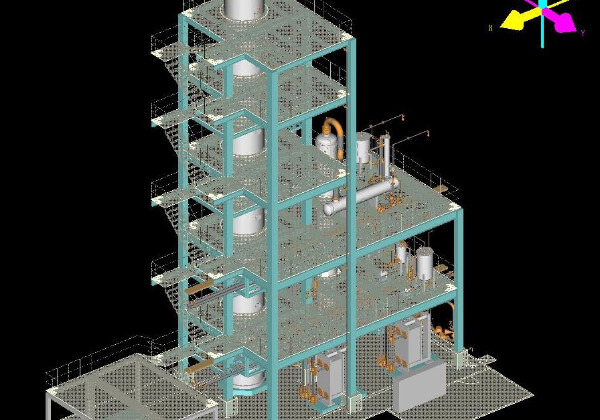
プラントの計画時から、設計、調達、建設、試運転、更には完成後のメンテナンスに至るまでトータルに対応いたします。当社は機器製作工場を所有しておりますので、細やかな機器設計?製作が可能です。
-
 FORE:The opening of the year 1848 was signalised by the appointment of a special commission, which was convened to try those accused of agrarian murders in the counties of Tipperary, Limerick, and Clare. The judges were the Chief Justice Blackburne and the Chief Baron Pigot. The commission was pre-eminently successful. The trials commenced at Limerick on the 4th of January. The Chief Justice, in his charge to the jury, drew a melancholy picture of the demoralised state of the country. He praised the patience and enduring fortitude of the people under the visitation of famine, which were generally in the highest degree exemplary, and he made this remarkable statement:¡ª"I do not find in the calendar before me, nor after the experience of the last two circuits have I been able to find, a single case in which destitution or distress, arising from the visitation of God, has in the remotest degree influenced this illegal confederacy, or stimulated any of those outrages." The first person tried was the notorious William Ryan, nicknamed "Puck," one of the greatest ruffians ever brought to the bar of justice. He was tried for the murder of a neighbour, named John Kelly, into whose house he entered, and shot him dead upon the spot, in the presence of his family. He was found guilty, and hanged on the 8th of February. He was well known to have committed nine murders during the previous year. A man named Frewin, a respectable farmer, was transported for life, being found guilty of harbouring Ryan, and screening him from justice. The next batch of prisoners consisted of six ill-looking young fellows, all of whom appeared to be about twenty years of age, charged with the abduction of the daughter of a respectable farmer, named Maloney, for whom they were in the habit of working, in order that another farmer, named Creagh, might marry her. Sir Richard Quin, made a peer.
工場建設、プラント新設の計画の立案には、大きな労力を要します。当社では、お客様の一助となるべく、官庁届け出の助成を行いながら、工場建設を進め、抱えておられる問題の解決に取り組んでおります。
-
 FORE:The alarmed Ministers now mustered what ships they could, and despatched Admiral Byng with them from Spithead on the 7th of April. The whole of these ships amounted only to ten, in a half rotten condition and badly manned; and they commenced their voyage only three days before the French armament issued from Toulon, the English having to cross the Bay of Biscay, and traverse two hundred leagues of the Mediterranean, whilst the French had only seventy leagues to travel altogether. The French armament consisted of twelve ships of the line, and numerous transports, under Admiral La Galissoni¨¨re, consisting of sixteen thousand men, under the command of the Duke de Richelieu. General Blakeney received news of the approach of this fleet by means of a fast-sailing sloop, and began in all activity to prepare for his defence. He collected his forces into the castle of St. Philip, commanding the town and harbour of Mahon, calling in five companies from Ciudadela. All his troops, however, amounted only to two thousand eight hundred. He had large quantities of cattle driven into the fort, flour and bakers were got in, the ports blocked up, and he sank a sloop in the channel to obstruct the entrance to the harbour. The French fleet appeared off port Ciudadela on the 18th of April, but Byng did not come in sight till the 19th of May¡ªa month after¡ªand then he came disappointed and dispirited. There was a mutual attempt made by Byng and by Blakeney to effect communication, but it does not appear to have been of a determined character, and it failed. La Galissoni¨¨re was now bearing down on Byng, and the next day, the 20th of May, the two fleets confronted each other. Byng, about two o'clock, gave the signal to Rear-Admiral West to engage, which West did with such impetuosity, that he drove several of the French ships out of line. But Byng himself did not follow the example of West; he hung back, and thereby prevented West from following up his advantage. It was in vain that Byng's own captain urged him to advance; he pretended that it could not be done without throwing his ships out of regular line; and he kept at such a distance that his vessel, a noble ship carrying ninety guns, never was fairly in action at all, and had not a single man killed or wounded. Thus deserted, West was compelled to fall back; and La Galissoni¨¨re, who showed no disposition to continue the fight, sailed away. Byng retired to Gibraltar.During this time Britain was suffering severely from the effects of the war. The nation was indignant under the disgrace of the complete defeat of its army on the Continent, at the defection of those very Allies who had been so profusely subsidised, at the perfidy by which these despot Powers had made Britain the efficient party in the dismemberment of Poland, and at the heavy taxes imposed in consequence. Political meetings were held in most large towns and in the metropolis, expressing the most decided disapprobation of the policy of Ministers and at the refusal of all reforms. At the end of June a monster meeting had been held in St. George's Fields, and on the 26th of October, another, of fifty thousand people, near Copenhagen House, at which the lately prosecuted but acquitted agitators, Thelwall, Gale Jones, and others, were the speakers. The numbers and tone of these meetings, which were accompanied with loud cries of "Bread! Bread!" and "Down with Pitt!" greatly alarmed Government, and there was a summons of Parliament at the unusually early date of October 29th, only three days after the meeting in Copenhagen Fields. On going to the House to open the session, the king¡ªwho had become very unpopular from his eager support of the war, and his going about saying, "The French won't leave a single crowned head in Europe!"¡ªwas shot at with an air-gun in Margaret Street, opposite to the Ordnance Office, the ball from which passed through the windows of the carriage, between his Majesty and the Earl of Westmoreland. The king on entering the House, exclaimed to the Lord Chancellor, "My lord, I have been shot at!" As the king returned, he was again furiously hissed; there was the same vociferous shouting of "Bread! Bread!" and "No Pitt!" Stones were thrown at the royal carriage; and, in the haste and confusion to escape into the palace of St. James's, one of the royal grooms was thrown to the ground, and had his thigh broken. The king got into a private coach to regain Buckingham House, where his family was; but he was recognised, and pursued by the same cries of "Bread! Bread!" and "Peace!" That evening the king, who had[449] behaved throughout with great courage, accompanied the queen and three of his daughters to Covent Garden Theatre, where he was received with zealous acclamations; the actors sang "God save the king!" three times over. Some of the people in the gallery were, however, pretty vehement in their hisses, but were attacked and turned out.
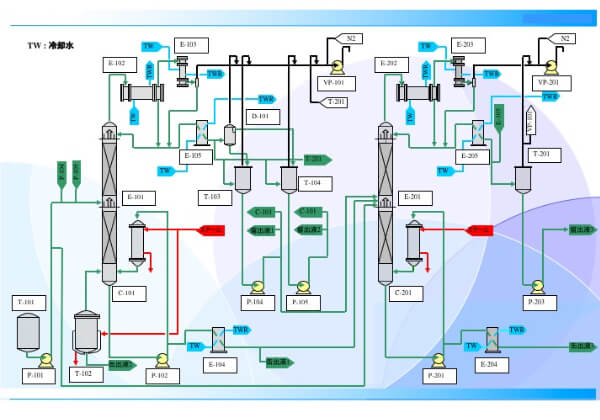
主要機器等の仕様を決定し、プラントの基本フローや配置を決定します。
-
 FORE:The Covent Garden meeting became thenceforth an annual feature in the political events of the metropolis, and the effects of this movement in the chief city of the kingdom were seen in the election of Mr. Pattison, the Free Trade candidate, for the City of London. Another sign of the times was the accession to the ranks of the Anti-Corn-Law League of Mr. Samuel Jones Loyd, the wealthy banker, a conspicuous City man, and a great[509] authority on financial matters. This gentleman addressed a letter to the council of the League in October, 1844, in which, after mentioning his reluctance to join a public body, for whose acts he could not be responsible, he said, "The time is now arrived when this must be overruled by other considerations of overwhelming importance. The great question of Free Trade is now fairly at issue, and the bold, manly, and effectual efforts which have been made by the League in its support command at once my admiration and my concurrence." Still more remarkable was the progress of the League in its scheme of converting the agriculturists themselves to their views. The truths which they had always maintained¡ªthat the tenant farmer had no real interest in maintaining the Corn Laws, the agricultural labourer, if possible, less, and that even the landed proprietor, on a far-seeing view of his interest, would be on the same side as themselves¡ªwere based upon arguments easily understood by calm reasoners, and were even beginning to make way with these classes themselves. Not a few great landowners and noblemen had openly classed themselves among their supporters. Foremost among these was Earl Fitzwilliam, who was one of the most effective speakers at Anti-Corn-Law meetings by the side of Mr. Cobden and Mr. Bright. Among the noblemen openly supporting their cause were the Marquis of Westminster, Lord Kinnaird, Earl Ducie, the Earl of Radnor, Lord Morpeth, and Earl Spencer.The British Government had done all in its power, except annuling the Orders in Council, to produce a better tone of feeling in America. It put up with many insults and violations of neutrality. It sent Mr. Foster as envoy to the United States to endeavour to adjust all differences; but in vain. This continued so till 1812, when, on the 20th of May, Mr. Russell, the American charg¨¦-d'affaires, presented Lord Castlereagh with a copy of an instrument by which France had, on the 28th of April, abrogated its Berlin and Milan Decrees so far as they related to American vessels. To show an equal liberality, Great Britain, on the 23rd of June, revoked its Orders in Council so far as concerned America, on condition that the United States also revoked its non-Intercourse Act. But this had no effect on the Government of America, which had already concluded a secret treaty with France, and was making every preparation for the invasion of our Canadian colonies. The Americans had the most profound idea of the stability of Buonaparte, and could not conceive that the expedition that he was now preparing against Russia would prove his overthrow. But they expected that Buonaparte would crush Russia altogether, and would rule unopposed over Europe; that the Government of Great Britain was bankrupt, and that they might assail her with impunity. Accordingly, all activity was used in getting ready all kinds of ships to send out as privateers, calculating on a plentiful spoil of British traders in the waters along the American coast and amongst the West Indian Isles, before they could be put upon their guard. At the same time, on the 14th of April they laid an embargo on all American vessels, so as to keep them at home; and on the 18th of June the President announced to Congress that the United States and Great Britain were in an actual state of war. There was a studied ambiguity in this declaration; it did not candidly take the initiative, and assert that the United States declared war against Great Britain, but said that the two countries were, somehow or other, already in a state of war.
設備の構成要素の詳細な仕様や配置を決定し、図面を作成します。
-
 FORE:A great proportion of these results had been produced by the rapid growth of manufactures. The introduction of steam, and the inventions of the spinning-jenny and other kinds of machinery, had given such a development to manufactures, that the value of these at the end of the reign made three-fourths of the whole exports. Agriculture had made considerable progress, and of this art the king was a zealous patron, especially of the improvements in the breed of sheep, importing himself merinos from Spain at great cost. There were also great promoters of improvements in stock, such as Bakewell, Culley, and others, and the high price of corn and of all kinds of agricultural produce during the war acted as stimulants to farming. The value of land also caused the enclosure of vast tracts, and much planting of trees was done, especially in Scotland, which had previously been very neglectful in that respect.
詳細設計に基づきポンプや部品類の購入品の調達先を選定し、発注します。
プラントを構成する主要な機器は特注製作が多く、材料発注、製作、各種検査、運搬まで工程、納期を管理します。 -
 FORE:In the meantime the preparations for civil war went on steadily on both sides in Dublin, neither party venturing to interfere with the other. Lest the Government should not be able to subdue the rebellion with 10,000 troops in the strong points of the city, and artillery commanding the great thoroughfares, with loopholes for sharpshooters in every public building, an association was formed to provide loyal citizens with arms and combine them in self-defence. The committee of this body ordered six hundred stand of arms from the manufacturer, and also some thousands of knots of blue ribbon to be worn by the loyal on the night of the barricades. It was intimated that the Government would pay for those things, but as it did not, an action for the cost of the muskets was brought against a gentleman who went to inspect them. Circulars were sent round to the principal inhabitants, with directions as to the best means of defending their houses when attacked by the insurgents. There were instances in which the lower parts of houses were furnished with ball-proof shutters, and a month's provisions of salted meat and biscuits actually laid in. The Orange-men¡ªregarded with so much coldness by the Government in quiet times¡ªwere now courted; their leaders were confidentially consulted by the Lord-Lieutenant; their addresses were gratefully acknowledged; they were supplied with muskets, and the certificate of the master of an Orange lodge was recognised by the police authorities as a passport for the importation of arms.Among the other causes which contributed to the unpopularity of the Duke of Wellington and the weakness of his Administration was the prosecution by the Attorney-General of Mr. Alexander, the editor of the Morning Journal. A series of articles had appeared in that paper, which were considered so virulent and libellous, so far surpassing the bounds of fair discussion, that the Duke felt under the same necessity of ordering a prosecution that he had felt to fight the duel with Lord Winchilsea. It was regarded as an inevitable incident of his position, one of the things required to enable him to carry on the king's Government. He obtained a victory, but it cost him dear: a sentence of fine and imprisonment was inflicted upon his opponent, and the Morning Journal was extinguished; but, in the temper of the times, the public were by no means disposed to sympathise with the victor in such a contest. On the contrary, the victory covered him with odium, and placed upon the head of the convicted the crown of martyrdom. Mr. Alexander was visited daily in the King's Bench prison by leading politicians, and a motion was made in the House of Commons with a view to incriminate the Government who ordered the prosecution. In another instance also, but of a nature less damaging, the Government received a warning of its approaching downfall. Mr. Peel, anxious to mitigate the severity of the criminal code, and to render it less bloody, proposed to inflict the penalty of death only on persons committing such forgeries as could not by proper precautions be guarded against. It was a step in the right direction, but one too hesitating, and stopping short of the firm ground of sound policy. Sir James Mackintosh, therefore, on the third reading of the Bill, moved a clause for the abolition of the penalty of death in all cases of forgery, which was carried by a majority of 151 against 138. Thus the Session wore on, in a sort of tantalising Parliamentary warfare, with no decisive advantages on either side till the attention and interest of Parliament and the nation were absorbed by the approaching dissolution of George IV. and the dawning light of a new reign.
安全を第一に、管理技術者が責任を持って施工、工程、品質の管理を行いながら協力会社と連携し進めていきます。
土木?建築、機器据付、配管、電気?計装、断熱などの工事があります。 -
 FORE:With "The Battle of the Books" appeared "The Tale of a Tub;" and though these were anonymous, it was soon well known that they were from the hand of Jonathan Swift, a friend of Harley and Bolingbroke, who now assumed a position in the public eye destined to be rendered yet more remarkable. Swift was of English parentage, but born in Dublin in 1667. He was educated at Kilkenny and the University of Dublin. In early life he became private secretary to Sir William Temple, and at this time he wrote his "Tale of a Tub," which cut off all his hopes of a bishopric. He edited a selection from the papers of Temple, and then accompanied Lord Berkeley to Ireland as chaplain. Disappointed of the preferment which he had hoped for, he went over from the Whigs to the Tories in 1710, and thenceforward was an unscrupulous adherent of Harley and Bolingbroke, defending all their measures in the "Examiner," and pouring out his vengeance on all opponents with unflinching truculence. In his political[148] character Swift has been styled the great blackguard of the age, and certainly with too much truth. In spite of rare intellectual power, wit, and sarcasm, no principle or tenderness of feeling restrained him in his attacks on his enemies. If Harley and Bolingbroke are guilty of inflicting the disgraceful peace of Utrecht on the nation, simply to avenge themselves on the Whigs, no man so thoroughly abetted them in that business as Swift. His "Conduct of the Allies," his "Public Spirit of the Whigs," and other political tracts and articles, bear testimony to his unscrupulous political rancour. His "Drapier's Letters," and his treatment of Wood in the affair of the Irish halfpence, show that no means, however base and false, came amiss to him in serving the objects of his ambition. The great work of Swift is his "Gulliver's Travels," a work characterised by a massive intellect and a fertile invention, but defiled by the grossness that was inseparable from his mind, and that equally pollutes his poems, in which there is much wit and humour, but not a trace of pathos or tenderness. There is none of that divine glow of love and human sympathy, mingled with the worship of beauty and truth, which courts our affections in the works of the greatest masters. When we are told that Swift's grossness is merely the grossness of the time, we point to "Robinson Crusoe," to "The Seasons" and "Castle of Indolence" of Thomson, and to the works of Addison, for the most admirable contrast. Swift¡ªwho died in the famous year of the '45¡ªwas one of the most vigorous writers of the age, but he was one of the most unamiable. He was the Mephistopheles of the eighteenth century. "MY DEAR LORD ANGLESEY,¡ªI have been very sensible, since I received your last letter, that the correspondence which that letter terminated had left us in a relation towards each other which ought not to exist between the Lord-Lieutenant and the king's Minister, and could not continue to exist without great inconvenience and injury to the king's service. I refrained from acting upon this feeling till I should be able to consult with my colleagues, and I took the earliest opportunity which the return to town of those who were absent afforded to obtain their opinion, which concurred with my own. Under these circumstances, having taken the king's pleasure upon the subject, his Majesty has desired me to inform you that he intends to relieve you from the Government of Ireland. I will shortly notify the arrangements which will become necessary in consequence.
プラント完成後、性能が出るか試運転を行って確認、調整を行います。
きめ細やかな運転指導により実運転へのスムースな移行を促します。完成図書と共にお引渡しとなります。
運転?保守フェーズ
-
 FORE:Murat hastened in disguise to Naples to consult with his wife, who had as much courage and more judgment than he had; but this availed him nothing. On the 20th of May his generals signed a convention with the Austrians at Casa Lanza, a farmhouse near Capua, to surrender Capua on the 21st, and Naples on the 23rd, on condition that all the Neapolitan officers who took the oath of allegiance to King Ferdinand should retain their respective ranks, honours, and estates. At this news Murat fled out of Naples, and, with a very small attendance, crossed over in a fisherman's boat to the island of Ischia, and his wife went on board the vessel of Commodore Campbell, which, however, she was only able to effect by a guard of three hundred English sailors and marines, for the lazzaroni were all in insurrection. Commodore Campbell, having received Caroline Buonaparte, her property and attendants on board his squadron, then sailed to Gaeta, where were the four children of Murat, took them on board, and conveyed them altogether to Trieste, the Emperor of Austria having given Madame Murat free permission to take up her residence in Austria, under the name of the Countess of Lipano.
プラント、機器の安全と安定稼働のために、定期的なメンテナンスをお薦めいたします。
-
 FORE:
FORE:生産量を減らすことなく、生産能力を増強するなど、お客様のご要望にお応えできるソリューションをご提案いたします。
お客様のプロセスノウハウと当社の固有技術の融合によって最適化、効率化、さらには環境に優しい設備を実現をいたします。海外現地法人(タイ、ベトナム)におきましても同等のエンジニアリングが提供できるように、本社の技術者と連携し管理いたしております。

※これ以外にも様々な単位操作装置、単体機器製作ができます。
| 業種?分野 | プラント?設備名称 | 構成プロセス | 付帯設備?工事施工 |
|---|---|---|---|
| ファインケミカル | IT関連化学品プラント | 反応プロセス ろ過分離プロセス 乾燥プロセス |
クリーンルーム、充填、タンクヤード、 ユーティリティ、消火?防火設備、 土木?建築、計器?計装工事、 電気工事 |
| 食品工業 | 澱粉工場 | 反応プロセス 分離プロセス 精製プロセス 脱水?乾燥プロセス |
タンクヤード、ユーティリティ、 消火?防火設備、土木?建築、 計器?計装工事、電気工事、 原料受入?貯蔵設備、計量?包装設備 |
| 化学工業 | 合成樹脂工場 > | 反応プロセス 蒸留プロセス 濾過分離プロセス 乾燥プロセス |
タンクヤード、ユーティリティ、 供給設備、充填、自動倉庫、 焼却設備、出荷設備 |
| 食品工業 | 糖化工場 > (異性化糖類製造設備) |
液化?糖化プロセス 濃縮プロセス 濾過?精製プロセス |
タンクヤード、ユーティリティ、 土木?建築、計器?計装工事、 電気工事 |
| 環境?リサイクル | 溶剤回収プラント | 濃縮?調整プロセス 蒸留プロセス |
タンクヤード、計量設備、 ユーティリティ、消火?防火設備、 計器?計装工事、電気工事、 原料受入?貯蔵?出荷設備 |
| 無機化学工業 | 触媒製造プラント (自動車用) |
調合プロセス コーティングプロセス 焼成プロセス |
ロボット搬送システム、 原料調整?供給装置 |
| 無機化学工業 | 二次電池用原料 精製プラント |
調整プロセス 反応プロセス 分離?濃縮プロセス 蒸留プロセス |
タンクヤード、ユーティリティ、 土木?建築、空調設備、集塵?局所排気、 計器?計装工事、 電気工事、貯蔵設備、計量?包装設備 |
| 新エネルギー | バイオエタノール 大型実証モデルプラント > |
蒸留プロセス 脱水プロセス |
計器?計装工事、電気工事 |
| 無機化学工業 | 水素回収設備 | 水素回収プロセス | タンクヤード、冷却システム、 計器?計装工事 |